
"We Two"
Watching Christopher Nolan’s The Odyssey and Discovering the Blessing Every Son Needs

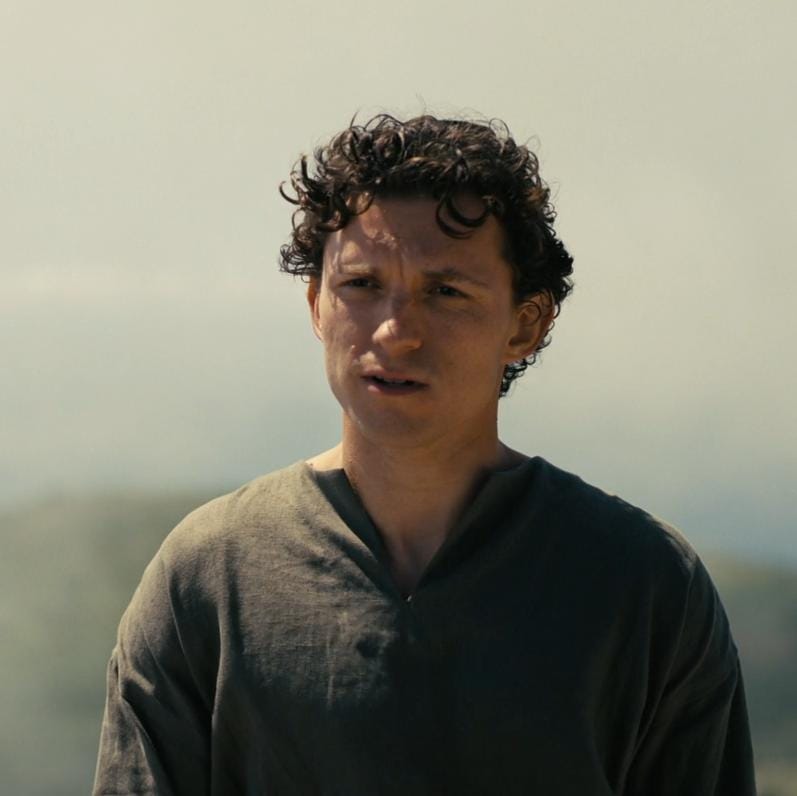
“What? The Odyssey is only going to be one movie?”
That was my first reaction when I heard about Christopher Nolan’s adaptation. I could not imagine how anyone could fit the whole sprawling epic into a single film. Yet Nolan somehow preserved much of the poem’s layered movement—its stories within stories, its shifts through memory and time—while making it work on the screen. I was genuinely impressed.
My sons and I saw the film on its second day in theaters. As the story unfolded, I was struck by how much weight Nolan gave to Telemachus’ quest alongside the better-known adventures of Odysseus. Their journeys move toward one another: Odysseus is trying to come home; Telemachus is trying to find his father. The Odyssey is as much the story of a young man searching for the father he has scarcely known as it is the story of an older man struggling to return home.
Sitting beside my sons, I found myself wondering how each of them has searched for his father—and whether I have always been present enough to be found. Beneath that question lay another: Why does the search for identity so often become a search for a father whose word can name us?
The Son Who Searched for His Father
When we first meet Telemachus, his father has been gone for nearly twenty years. The Trojan War has ended, and the fates of its other great leaders have become known, but no one can say whether Odysseus is alive or dead. The uncertainty has left both his household and his kingdom suspended.
Men have crowded into Odysseus’s palace to court Penelope, assuming that the missing king will never return. Whoever can nab the queen can nab the throne and its wealth. Day after day they consume his food, abuse his servants, and treat his home as though it already belonged to them. Telemachus is the prince of Ithaca, but he possesses neither the authority nor the strength to drive them.
Like every hero’s journey, his search for Odysseus will also become a journey toward his own transformation. Homer repeatedly calls Telemachus sensible: he is intelligent, observant, and increasingly aware of what is happening around him. In the film he is especially bright-eyed, hopeful, and maybe a bit naive. Yet intelligence is not the same as authority, and promise is not the same as maturity. In Telemachus the lad, something is still missing.
In two scenes, Nolan makes this painfully visible. Telemachus spars with an older instructor, learning to expose his body just long enough to draw an opponent into a vulnerable position. During practice, the tactic works. Soon afterward, however, he attempts to confront the suitors as they abuse his household. This time he hesitates, fails, and is beaten to the floor in his own hall.
He has learned the maneuver, but he cannot yet become the man capable of using it when it matters.
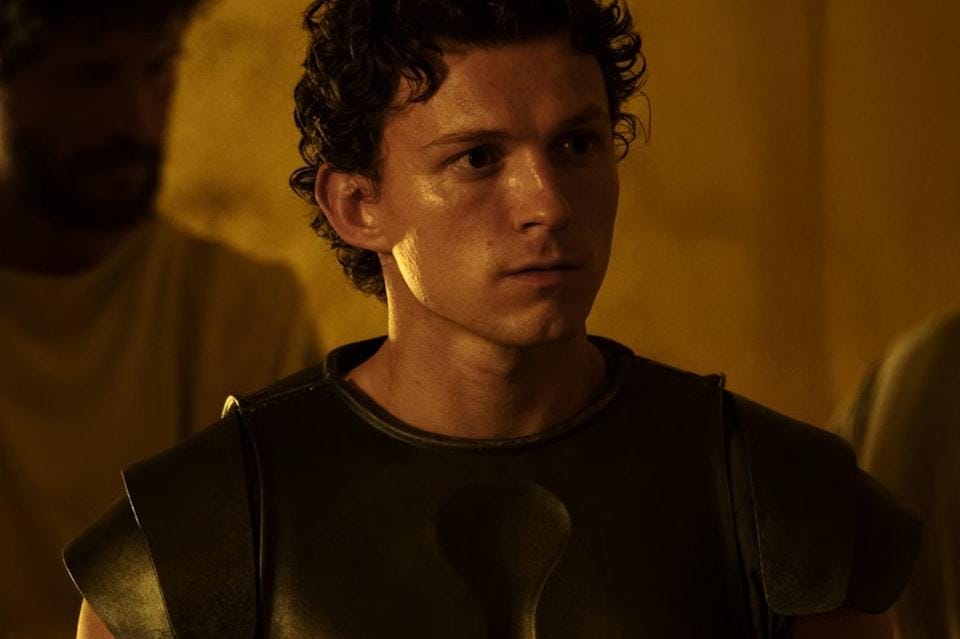
Perhaps the prince simply cannot measure up to the king.
There it is—the question lurking beneath every challenge and haunting every failure:
“Do I measure up?”
“Do I Measure Up?”
We can learn our strengths, test our courage, and grow in honest self-knowledge. But we cannot speak the final word over ourselves. We are not designed to be our own blessers. The question of who we are must finally be answered by someone who knows us and possesses the authority to name us.
We are not designed to be our own blessers.
For a child, that word should first come through a father and mother. This is both a gift and a warning. A parent’s silence does not leave the question unanswered; it leaves others free to answer it. When children cannot find the blessing they need at home, they will search for it elsewhere.
And the marketplace is crowded with voices eager to name them—to measure their worth by achievement, attractiveness, appetite, anger, consumption, or belonging to the right tribe. Each offers some version of the same promise: Let us tell you who you are.
Telemachus searches more wisely. He leaves Ithaca to seek those who knew his father: Nestor, the keeper of horses, and Menelaus, the husband of Helen. They receive him kindly and see something of Odysseus in him. They regale him with stories of his father’s courage and cunning. They are something like uncles to the fatherless prince, helping him recover his inheritance and calling him toward the man he might become.
Their words matter. The tales of Odysseus deepen Telemachus’s hunger for his father’s return. But stories, however true, cannot substitute for presence. Nestor and Menelaus can tell Telemachus what Odysseus was like. Only Odysseus can speak to him with the authority of a father.
Ithaca needs their king. Penelope needs her husband. Telemachus needs his father.
“We Two”
The stories lead Telemachus home still hungry for his father. Home is where his transformative journey will climax. In the hut of Eumaeus, one of Odysseus’s faithful servants, he finally meets the man he has been seeking—although he does not recognize him at first. Odysseus has returned to Ithaca disguised as an old beggar. In his disguise, the older man asks Telemachus why he does not drive out the suitors. The prince still doubts himself, saying that he is only a young man and unable to mount a defense against the assault against his family.
When Odysseus reveals himself, he kisses his son and weeps until his tears fall to the earth. Telemachus throws his arms around him, and father and son mourn together for all the years taken from them.
The embrace matters. The tears matter. But what happens next transforms Telemachus.
Odysseus begins to lay out his strategy to drive out the suitors and recover his land. As he does so, he asks Telemachus for his knowledge and advice.
Again and again, Odysseus speaks of “we two.”
Again and again, Odysseus speaks of ‘we two.’
The mighty and cunning king looks upon the young man who has just confessed his weakness and says, in effect, “You and I will make this right.”
This is the blessing Telemachus has crossed the sea to find. Odysseus does not merely tell his son that he loves him. He treats him as worthy of trust. He calls him to stand beside him.
Catch how Homer ends their conspiring: “So he [Odysseus] spoke and the strong and mighty Telemachus smiled and with his eyes he glanced at his father.”
In Homer’s poem, Odysseus and Telemachus will stand together at the center of the battle to restore their household and kingdom.
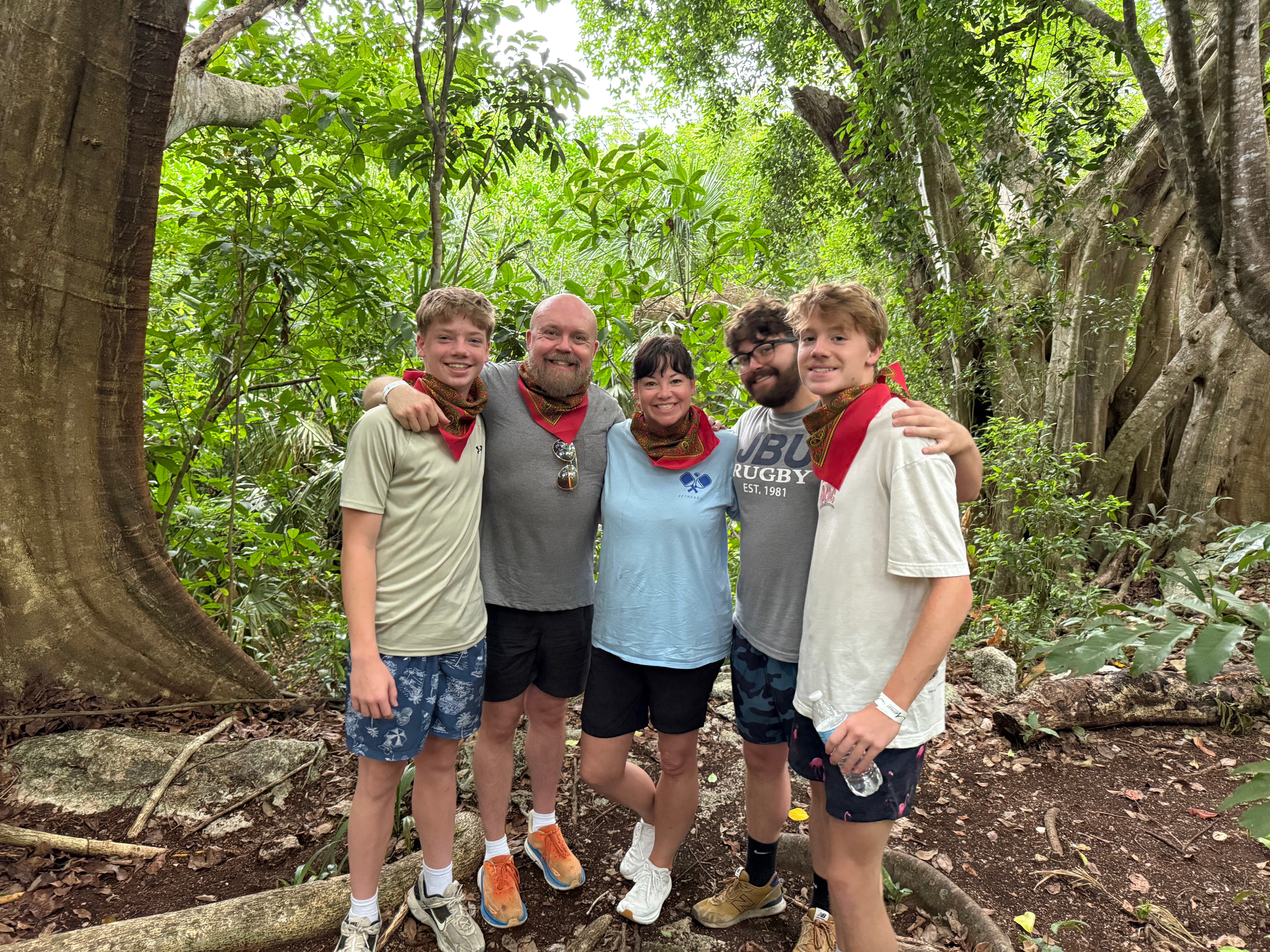
I have seen something of that smile on the faces of my own sons. I have not always spoken the word as clearly or consistently as I wish I had. But when I have spoken to the men they were becoming—when I have said, in one way or another, “I see the man in you”—I have watched a spine straighten, a chin lift, and something steadier enter the face.
To hear a father’s blessing is a mighty and wonderful thing.
The Father Who Finds Us
This is even more true when we think of our original Father, the One who has long sought us. Of course, in our story, the Father did not leave, nor was He delayed. Rather, we are Telemachus in our need for the Father and Odysseus in our search for home. Our separation is our own doing. So we are set upon by wooers and abusers. In spite of what we tell ourselves, we are haunted by our inadequacy and our repeated failures.
Just as we are haunted by our weakness, we are also haunted by the stories of what He is like. A deep longing moves us to seek Him, to hear more about Him, to wonder and to wander. Then He finds us, and everything changes. He looks at us, sees us, and calls us home. He welcomes us with a bath and with a meal.
In the baptismal bath, our Father anoints us and calls us His own: “You are my beloved child, and with you I am well pleased.” His word accomplishes what it speaks, uniting us to His Son and forming us into what He declares us to be. His blessing is not merely affirmative, but transformative.
He feeds us with the finest wheat and sweetest wine. There He communes with us at the Table that becomes our home. There He also conspires with us: “We will continue this work of making things right.” Blessed by His word, we rise and go forth as the strong and mighty people He is forming us to become.
It is a beautiful and stirring tale. Best of all, it is true.
Afterword:
Glenn Packiam has also written a beautiful and penetrating reflection on Nolan’s film, “The Christ-Haunted World of Christopher Nolan’s The Odyssey.” Glenn follows different currents in the film than I have here, and his essay helped me see even more of its theological depth. I warmly recommend reading it.

Wow, there's a lot of parental wisdom in this read. Thank you!! I got a lot out of this!